 Skip to content

How to Analyze Congressional Bills: A Step-by-Step Breakdown for Policy Researchers
How to analyze congressional bills is a systematic method for dissecting legislative text to uncover its intent, mechanics, and potential impact. It works by breaking a bill into its key components—title, findings, definitions, provisions, and funding—to evaluate how policy changes would function in practice. This approach offers the benefit of transforming opaque legal language into actionable insights, empowering you to anticipate consequences before a vote or advocacy effort. Use it by reading sequentially, noting each section’s purpose, and cross-referencing with existing law to identify shifts or loopholes.
Understanding the Anatomy of a Congressional Bill

To analyze any congressional bill effectively, you must first dissect its anatomy. Begin with the bill number and sponsor, which reveal its origin and lead advocate. The title and preamble state the intended purpose, but the core lies in the legislative text, where sections are organized by clauses and amend existing U.S. Code—often substituting or striking language. Always locate the effective date and severability clause, as they dictate timing and survivability if parts are struck down. For practical analysis, cross-reference the findings and definitions sections first; these set the scope and legal boundaries for every subsequent provision. Ignoring this structural blueprint leads to misinterpretation of intent and impact.
Decoding the bill number, title, and sponsor information
The bill number reveals the chamber of origin (H.R. for House or S. for Senate) and its sequential assignment in that Congress, instantly indicating legislative priority. The title, often a short “popular” name followed by the official long title, clarifies the bill’s purpose and scope. Sponsor information includes the primary author’s name, party, and state, alongside a list of cosponsors, which signals initial political support and potential coalition strength. Together, these three elements allow you to categorize the bill’s provenance, topical intent, and early backing without reading the full text.
The bill number indicates origin and sequence; the title defines purpose; the sponsor and cosponsors reveal political support and authorship—decoding these three identifiers provides a rapid, substantive entry point for further analysis.
Differentiating between House and Senate versions
To differentiate between House and Senate versions of a bill, first compare the bill number prefix: H.R. for House, S. for Senate. Then, examine the legislative text discrepancies for clauses unique to each chamber. Focus on differences in funding levels, effective dates, or scope. A clear sequence:
- Cross-reference the same section numbers across both versions.
- Note any added or omitted subsections in one version.
- Identify different amendment language inserted by each chamber’s committee markups.
Finally, check the sponsor and cosponsor lists; differing party affiliations often signal substantive policy variations in the bill’s language.
Identifying the bill’s type: authorization, appropriation, or resolution
To analyze a bill effectively, first determine its legislative category. An authorization bill establishes or continues a federal program or agency, setting spending limits but not providing actual funds. An appropriation bill actually grants the money to fund those authorized programs for a fiscal year. In contrast, a resolution (simple, concurrent, or joint) handles internal congressional matters, constitutional amendments, or non-binding policy expressions—it does not carry the force of law like the other two types. This distinction is crucial for predicting a bill’s practical impact.
Q: Does a resolution ever authorize spending?
A: No. Only authorization and appropriation bills can authorize or allocate federal funds; resolutions address procedural, ceremonial, or declaratory matters.
Locating the Full Text and Official Status
To analyze any congressional bill, you must first locate the full text through official sources like Congress.gov or GovTrack.us, which provide the exact language introduced. For official status, rely on the Library of Congress’s THOMAS or the Government Publishing Office (GPO) to see the bill’s current stage—introduced, reported, passed, or enrolled. Always verify the version number, as amendments create multiple iterations (e.g., “Engrossed in House” vs. “Enrolled”). Never use third-party summaries for analysis; the official text alone reveals legislative intent. Cross-reference the “Actions” tab to confirm final passage or veto. Without this verified access, your analysis lacks authority and risks misinterpreting the bill’s exact legal language and real-time progress.
Using Congress.gov and GovTrack for primary sources
When you need the actual bill text, Congress.gov is your primary source. It provides the official, authenticated version of every introduced bill, resolution, and amendment straight from the Government Publishing Office. For tracking, GovTrack.us mirrors this data but adds user-friendly tools like “Text of Bills” pages that highlight changes between versions. You can compare the engrossed (passed one chamber) text to the enrolled (final passed version) directly. Both sites let you download PDFs or XML, ensuring you’re working with the legislative record itself, not a summary.
Use Congress.gov for official text status and GovTrack for version comparisons, but always verify the final enrolled bill on Congress.gov.
Checking the latest action, committee referral, and vote history
To gauge a bill’s trajectory, first check its latest action, found on Congress.gov or GovTrack. This entry reveals the most recent procedural step, such as a floor vote or committee markup. Next, identify the committee referral, which shows which panels are debating the text; a bill sent to multiple committees often faces a longer path. Finally, examine the vote history to see roll-call outcomes in each chamber, including amendments and procedural motions. A bill’s committee referral can be more telling of its survival odds than its initial sponsor. Follow this sequence:
- Locate the “Latest Action” section on the bill’s summary page.
- Scroll to “Committees” to see referral details and report number.
- Review “Votes” tab for recorded ayes, nays, and roll numbers.
Finding companion bills and related legislative activity
To fully grasp a bill’s journey, you must track companion bills and related legislative activity across both chambers. A companion bill is an identical or near-identical measure introduced in the opposite house, often to speed passage. Use Congress.gov’s “Related Bills” tab or GovTrack’s “Similar Bills” feature to instantly surface these counterparts. Pair each companion’s status—like hearings, markups, or votes—with your original bill’s progress to map the full legislative path. This reveals where momentum stalls or accelerates, ensuring you don’t analyze a measure in isolation.
- Search for exact text or bill number matches on Congress.gov to identify identical companions.
- Review each companion’s committee actions, which can differ from the primary bill’s timeline.
- Monitor floor votes and amendments on companion bills to anticipate changes to your original measure.
Dissecting the Bill’s Structure and Key Sections
When you’re dissecting a bill’s structure, start by scanning the table of contents to map its sections. Focus on the “Findings and Purpose” section—this reveals the problem Congress is trying to solve. The “Definitions” section is critical, as it locks in the exact meaning of key terms you’ll see later. Pay close attention to any “Severability” clause, because it tells you whether the entire bill collapses if one part is ruled invalid. Next, identify sections that change existing law (marked by “amends” or “strikes”) versus those creating new programs. Finally, check the “Effective Date” section to know when each part kicks in. This method keeps you focused on the bill’s legal mechanics, not its political spin.
Reading the preamble, findings, and purpose clauses for intent
When dissecting a bill, start by reading the preamble, findings, and purpose clauses for intent. These upfront sections tell you *why* the bill exists, not just what it does. The “findings” lay out the problem Congress identifies, while the “purpose” states the intended solution. This context shapes how you interpret every operative section later.
- Spot the exact problem Congress claims to solve in the findings.
- Compare the stated purpose to the actual legal language for hidden agendas.
- Note any definitions or limits set in the preamble that affect later clauses.
- Identify the target audience or sector implied by the stated goals.
Scanning definitions to understand key terms and scope
Scanning the definitions section is the first step in dissecting a bill, as it establishes the precise meaning of key terms that govern the entire document. You must identify every defined word, noting how the bill narrows or expands common language to create its specific legal scope. These definitions directly determine which entities, actions, or contexts fall under the bill’s jurisdiction. Overlooking a single term, such as “covered entity,” can cause you to misinterpret the bill’s requirements, penalties, or effective dates. Strategic term analysis here reveals the bill’s intended boundaries and prevents costly misreadings of subsequent sections.
Evaluating the operative clauses for specific provisions and mandates
Evaluating operative clauses requires isolating each provision that creates a legal duty or prohibition. Focus on mandatory language analysis—words like “shall” versus “may” determine enforceability. Map each specific mandate to its triggering conditions, such as deadlines or funding thresholds. Check whether a clause includes a private right of action, which empowers civil enforcement. Identify sunset dates or reporting requirements that define a provision’s lifespan. This granular review reveals whether the bill’s core directives are actionable or merely aspirational.
- Highlight verbs like “shall,” “must,” or “may” to classify each clause’s force
- Trace each mandate to its enforcement mechanism or penalty for noncompliance
- Note any conditional language (e.g., “if funds are appropriated”) that could nullify the provision
- Verify whether a clause defines a measurable standard or leaves implementation to agency discretion
Tracing the Amendments and Markup Process
Tracing amendments is key to seeing how a bill morphs from its introduction to its final vote. You don’t just read the clean version; you need to pull the committee’s markup transcript and side-by-side comparisons from Congress.gov. These documents reveal which sections were gutted, which were inserted during a late-night session, and whose pet project got attached. Watch for “strike and insert” language—it often signals a complete rewrite of a core provision. Pay attention to the manager’s amendment, as it’s a catch-all that can sneak in major policy shifts. A single dropped clause in a markup can silently kill a bill’s intended enforcement mechanism. Always cross-reference the original numbered text against the final committee print to spot these surgical changes.
Reviewing proposed amendments and their sponsors
When reviewing proposed amendments, zero in on who is sponsoring them. A member’s committee assignments and past voting record often reveal their true intent—a sponsor from the opposing party might signal a genuine compromise, while one from the bill’s own side could be a poison pill. Cross-reference the amendment’s text with the sponsor’s stated goals using sponsor intent analysis by checking their floor statements or press releases. This helps you spot hidden riders or minor tweaks that shift a bill’s entire impact.
To decode an amendment, always ask: who proposed it, and what do they usually fight for? Their sponsorship is your clue to whether the change is substantive or strategic.
Comparing the introduced version with reported committee text
To see what actually changed in a bill, line up the introduced version PDF with the committee’s reported text. Run a side-by-side comparison using a diff tool or a split-screen viewer, which instantly highlights deleted sections in red and new additions in green. Focus your attention on the markup summary the committee publishes, often called a “comparative print,” to save time. This method makes it easy to spot amendment-specific changes, like a shifted deadline or a narrowed definition, without reading every word. You want to track whether a provision was softened, added from a substitute amendment, or removed entirely before the floor vote.
Identifying floor amendments and their impact on the original language
When analyzing a bill, you must actively identify floor amendments—proposals offered during full chamber debate. Unlike committee markups, floor amendments often appear as critical last-minute language shifts that can gut or reverse entire sections. To spot these, compare the introduced version against the engrossed version (passed chamber). A simple addition like “except as provided in subsection (b)” can nullify a whole regulatory framework. Even words like “knowingly” or “or” inserted into a list dramatically alter scope.
Q: How do you track a floor amendment that quietly rewrote the original intent?
A: Cross-reference the bill’s engrossed text with the Congressional Record’s amendment table; look for strike-and-insert patterns that replace “shall” with “may” or add qualifying clauses—those shifts usually reveal the real impact.
Analyzing CBO Score and Fiscal Impact
When you crack open a congressional bill, the CBO score is your financial roadmap. You start by locating the cost estimate, then immediately check for the mandatory vs. discretionary spending split—this tells you if funds are locked in by law or subject to annual fights. Next, compare the revenue side: does the bill increase taxes, cut them, or shift existing fees? The real story emerges in the 10-year window, where you watch for an apparent balance that masks a cliff—a massive future cost kicked past the budget horizon. Perhaps the most overlooked column is the “direct spending” line, which can quietly entrench new obligations without a single appropriations vote. Finally, cross-reference the CBO’s baseline assumptions against the bill’s text to spot optimistic projections that inflate savings or downplay demand.

Interpreting the Congressional Budget Office cost estimate
Interpreting a Congressional Budget Office cost estimate requires focusing on its ten-year baseline projection, which assumes current law remains unchanged. Distinguish between direct spending (mandatory) and discretionary authorizations, as each carries different fiscal rules. Look for scoring assumptions—behavioral responses, macroeconomic effects, or likely offsets—since these drive the net deficit impact. Compare the estimate against the bill’s intended policy window: a score that excludes long-term revenue or spending shifts may understate true cost. Always verify whether the estimate includes dynamic feedback, as static scores ignore broader economic interactions. Direct your analysis to the estimate’s methodology and boundary conditions, not the policy itself.
Assessing budget authority, revenue effects, and deficit projections
To assess fiscal impact, begin by isolating the bill’s budget authority—the legal permission for agencies to incur obligations—noting its mandatory or discretionary classification. Next, trace how provisions alter revenue effects, such as changes to tax rates, credits, or excise fees, which directly shift federal income. Finally, combine these inputs to compute deficit projections by subtracting projected revenues from outlays over a ten-year window. A table clarifies the interplay:
| Aspect | Key Question | Data Source |
|---|---|---|
| Budget Authority | Does www.harvardjol.com it authorize new or modified spending? | Section-by-section summary |
| Revenue Effects | Does it increase or decrease income to Treasury? | Joint Committee on Taxation estimate |
| Deficit Projections | What is the net change to the deficit cumulatively? | CBO baseline projection |
Cross-check these three elements for internal consistency, as a revenue loss with offsetting budget cuts can produce a neutral deficit projection.
Understanding unfunded mandates and long-term fiscal obligations
When analyzing a CBO score, identifying unfunded mandates is critical as they shift fiscal burdens to states or private entities without federal appropriation. Long-term obligations, such as entitlement spending or debt servicing, often appear in the outyear projections of a score. These costs compound beyond the standard ten-year budget window, requiring scrutiny of dynamic scoring and mandatory spending triggers.
- Scrutinize the “Pay-As-You-Go” (PAYGO) table for any mandate that lacks a corresponding funding source.
- Evaluate the CBO’s “Long-Term Budget Outlook” section for projected interest payments and program cost growth.
- Verify if a temporary provision has a “sunset” that masks permanent fiscal obligations.
Examining Political Context and Stakeholder Positions
To analyze a bill’s viability, first map the political context by identifying the committee chair’s priorities and the majority party’s legislative agenda, as these determine if the bill receives a hearing. Then, scrutinize stakeholder positions: read official testimony from the Congressional Record to pinpoint which industries or advocacy groups support or oppose specific provisions. Practical Q&A: How quickly does stakeholder opposition kill a bill? If a unified bloc of high-spending lobbyists or a powerful committee member publicly opposes it, the bill’s chance of advancing drops significantly—often before a floor vote. Cross-reference stakeholder financial contributions to co-sponsors using OpenSecrets to predict which amendments will be proposed. This direct analysis of power dynamics and vested interests is far more predictive than reviewing the bill’s plain text alone.
Researching cosponsors, party lines, and voting patterns
To decode a bill’s political viability, first map its cosponsor network. A bipartisan cosponsor list signals broad appeal, while a partisan cluster reveals a narrow base. Next, check party-line voting records on similar past bills—this predicts future whip counts. Finally, analyze voting patterns from committee markups to floor roll calls; unanimous consent or a razor-thin margin tells you the bill’s chance of survival. Ignore these data points, and you miss the real power dynamics that determine passage.
Researching cosponsors, party lines, and voting patterns exposes the raw political alliances and obstacles shaping a bill’s fate—skip this, and you analyze blind.
Identifying key advocacy groups, industries, and opposition arguments
To decode a bill’s viability, zero in on identifying opposition arguments first. Search committee hearing testimonies and press releases from major lobbying groups (e.g., Chamber of Commerce, AFL-CIO) to pinpoint which industries fund the pushback. Then, map their counter-narratives—like cost or federal overreach—against the bill’s specific triggers. This reveals whether resistance is ideological, financial, or procedural.
- Check the Senate or House committee page for witness lists and submitted statements from affected organizations.
- Scan trade association websites for “position papers” or “action alerts” targeting the specific bill number.
- Track think tank reports (e.g., Heritage or Center for American Progress) to see which camp frames the legislation as a threat.
- Review Congressional Record entries for floor speeches naming which advocacy groups oppose or support the measure.
Tracking news coverage and official statements from committee chairs
When digging into a bill, start by tracking committee chair statements—they basically set the agenda. Look for press releases or floor speeches where the chair explains the bill’s intent or frames the opposition. Then, scan news coverage that quotes them directly; this reveals which parts are non-negotiable or have bipartisan buzz. Compare official statements with news reports to spot any spin or dropped priorities. You’re just looking for the chair’s stated goals and sticking points, not endless commentary.
Committee chair statements and news coverage together show you the bill’s driver and where the political friction is.
Cross-Referencing Related Laws and Existing Statutes
You must trace every proposed phrase back to the existing U.S. Code. When analyzing a bill, pull the specific title, chapter, and section it cites. Cross-referencing related laws reveals hidden conflicts: a new definition of “employee” might silently override the Fair Labor Standards Act. I once watched a clean energy bill crumble because it used a different emission standard than the Clean Air Act, creating a loophole. Always check the bill’s “Constitutional Authority Statement” for the exact statute it claims to modify; then read that statute’s neighboring sections to see if the bill repeals, amends, or duplicates existing language. This prevents the bill from writing dead law that contradicts its own foundation.
Using the US Code to see which laws the bill would modify
Cross-referencing the bill against the US Code modification requires locating the “Changes to Existing Law” section, often in a bill’s final pages. This section cites specific USC titles and sections the bill would repeal, amend, or add. Compare each cited statute line-by-line from the bill’s text to the current US Code online via govinfo.gov. Follow these steps to track modifications:
- Identify each USC citation (e.g., “52 U.S.C. § 10301”) listed in the bill’s amendment clause.
- Open the current USC version for that section and note its exact wording.
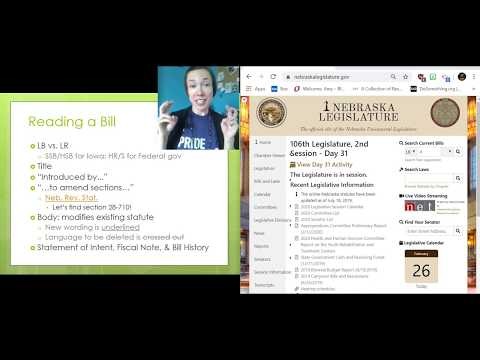
- Read the bill’s proposed text for that section, noting strikeouts (deletions) and underlines (additions).
- Verify the net effect: whether the modification adds, alters, or removes language, and how it changes legal obligations.
This process reveals the precise scope of the bill’s impact on federal law without relying on summaries.
Comparing the bill to previous similar legislation in past sessions
When analyzing a bill, comparing it to previous similar legislation in past sessions reveals intent and evolution. Start by identifying the bill’s predecessor by searching Congress.gov for bills with matching short titles or identical topics from the prior 2–4 sessions. Then, use a side-by-side comparison tool to map changes in the operative text. Create an ordered sequence of steps:
- Locate the identical or substantially similar bill from the prior session.
- Note whether the earlier bill died in committee, passed one chamber, or was enacted in a different form.
- Extract any revised definitions, new exceptions, or altered compliance dates.
- Review committee reports from the prior session for unresolved issues the new bill attempts to address.
This method directly shows whether the new version narrows or expands its scope relative to prior attempts.
Checking for preemption of state law or federal agency rulemaking
When analyzing a bill, identify clauses that explicitly state congressional intent to preempt state law or agency rulemaking. Examine the “preemption savings” language; broad phrasing can nullify existing state statutes and agency rules, while narrow exceptions preserve their authority. Cross-reference the bill against current federal regulations to spot contradictions that trigger preemptive override. Determine if the bill provides an express preemption provision, field preemption occupying the entire regulatory sphere, or conflict preemption when compliance with both is impossible. This scrutiny reveals whether the bill expands federal control or respects dual sovereignty, directly shaping compliance burdens for state governments and regulatory bodies.
Assessing Likelihood of Passage and Implementation
When assessing likelihood of passage, start by checking the bill’s sponsor and co-sponsors—bills from committee chairs or majority leadership have far better odds. Then, examine its committee assignment; a bill stuck in a hostile or crowded committee is unlikely to advance. For analyzing congressional bills for implementation, look for explicit funding sources or mandatory appropriations. A bill that relies on future discretionary budgets is fragile. Also, scan for preemption of state laws or complex reporting requirements—these can stall execution. Finally, track companion bills in the other chamber and any public statements from key stakeholders, like the White House or major interest groups, to gauge real-world pushback.
Evaluating committee leadership support and procedural hurdles
Check the committee chair’s public statements and past actions to gauge their enthusiasm—hostile chairs can kill a bill quietly. Also, identify if the bill faces a discharge petition hurdle, requiring a majority to pry it from a reluctant committee. Look for markups or hearing delays, which signal procedural stonewalling. These factors directly predict if a bill will ever reach the floor for debate.
Committees control the gate: chair support and procedural traps like stalled markups or discharge petitions are the real tests of bill momentum.
Factoring in the current congressional calendar and political climate
When analyzing a bill, check the congressional calendar and political climate to gauge if it has a real shot. A bill introduced late in the session, near recess or an election, is far less likely to move. Bipartisan support can still get a bill through a divided Congress quickly, but partisan bills often stall in a tense climate. Prioritize bills with co-sponsors from the majority party and leadership backing, as they control floor time. If the calendar is packed with must-pass funding or appointments, your bill probably won’t get a hearing. A calm political climate with crossover appeal also lifts a bill’s chances significantly.
Reviewing the bill’s path through reconciliation or regular order
To gauge a bill’s chances, you first need to know whether it’s riding the reconciliation or regular order train. Reconciliation bypasses the Senate filibuster (needing only 51 votes) but is limited to budget-related changes and expires each fiscal year. Regular order means facing a 60-vote threshold, which forces bipartisanship and can drag out or kill a bill. Spotting which path a bill is on tells you its procedural odds. Check the bill’s text or sponsor remarks for reconciliation instructions, then watch for committee markups and floor schedules to see if it’s moving fast under budget rules or slogging through standard debate.
Reconciliation signals a narrow, partisan sprint; regular order warns of a wide, bipartisan slog.
